

beyond
burnout
A full-day workshop on
pressure, practice &
presence.
- Two facilitators. Two complementary modalities.
- One clear arc: understand your story, then use your body to move through it.
The concept
01
Most people who carry weight for their teams, their families, their missions eventually hit a wall. Beyond Burnout is built for both sides of that wall. The ones already in it and the ones heading toward it. It names the hidden costs of pressure, purpose, and service — and offers practical tools grounded in real experience.
A carefully designed
experience with a clear arc:
understand your story, then use your body to move through it.
Morning
The morning opens with a keynote, an open Q&A, and The Debrief — a two-hour workshop segment that walks through the flags of burnout, the tools that address them, and normalizes a conversation most leaders never get to have about what it actually costs to be the person everyone leans on.
Afternoon
The afternoon takes that understanding into the body — Ally guides a live session teaching people how to use their body to move through pressure and imbalance.
Built for teams and
leaders who carry a lot.
Practical tools, grounded in real experience.
The facilitators
02
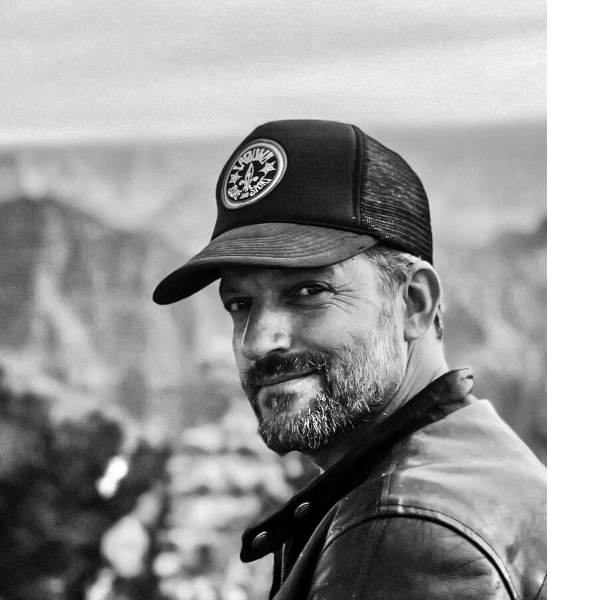
jon rose
Keynote speaker & co-facilitator
Jon Rose is a former professional athlete turned humanitarian leader. As a first responder, he has been on the ground in more than 50 major disasters and active conflicts, across 51 countries, helping millions of people. He is the founder of Waves For Water, one of the world's most respected disaster response and clean water organizations.

ally bogard
Breathwork facilitator & retreat leader
Ally Bogard is the Co-Founder of The Twenty Six and the author of The Quiet Teachers. With over twenty years of experience leading global workshops, immersive skill-training programs, and one-to-one mentorship, Ally has developed a rigorous, human-centered approach to facilitating transformation in both individual and group settings.
He now helps leaders and teams navigate the hidden costs of pressure, purpose, and service. His keynote draws on 15+ years of frontline experience to normalize the conversation around burnout, identity, and what it takes to rebuild from the inside out.
Her work spans practice development, career advancement, and leadership. In the retreat space, she brings that same precision to breathwork facilitation, guiding groups past the analytical mind and into direct, embodied experience.
50+
Major disasters and
active conflicts
20+
Years leading
global workshops
The arc
03
Part one
Jon's keynote opens the conversation. By sharing his own experience of accumulated trauma, burnout, and rebuilding, he de-stigmatizes what most people in the room are already carrying. That is followed by open Q&A and The Debrief — a two-hour workshop segment where Jon breaks down the flags he learned to watch for in himself and the tools he uses to maintain balance.
Inside The Debrief, participants do a short private writing exercise identifying which flags they see in themselves and noting when each first appeared. What they write becomes what they carry into the afternoon.
Part two
The afternoon begins with intention setting anchored in what participants wrote during The Debrief. The flags they identified become the material they carry into Ally's session — where the cognitive work of the morning becomes embodied.
The integration circle at the end brings the group back together for voluntary shares before people head out.
One integrated arc. Cognitive in the morning, embodied in the afternoon.
The afternoon modality
04
Her toolkit includes activating breathwork, guided visualization, and somatic movement. Some groups need to work at real depth. Others need it kept lighter.
A skilled practitioner who reads the room and deploys the right tool
at the right moment, with twenty years of experience behind her.
The goal is practical. Every participant leaves having practiced the tools in real time. The tools also work as regular training — helpful under pressure, or simply to stay sharp. All sessions are guided, supported, and structured for safety.
The schedule
Part one — 8:30 AM to 12:15 PM
Part one — Understand your story
8:30 AM
Arrival & welcome
Settle in, meet the facilitators, get oriented to the space and the day ahead.
Both
9:00 AM
Opening circle
Introductions, ground rules, and framing for the day.
Both
9:30 AM
Keynote: Healing the helper
Approximately 60 minutes of storytelling on pressure, burnout, and what rebuilding actually looks like. Real experience.
Jon
10:30 AM
Q&A
Open questions from the room. Not scripted; follow where the questions go. Register stays in the reflective mode of the keynote.
Jon
10:50 AM
Break
Quiet reset between the emotional register of the keynote and the practical register of The Debrief.
—
11:05 AM
The Debrief (2 hours)
Jon's post-keynote workshop breakdown. Section 1: the flags Jon learned to watch for, followed by a private writing exercise where participants identify their own. Section 2: the tools Jon uses to maintain balance, and open discussion. Material carries directly into the afternoon.
Jon
12:05 PM
Bridge: Story to body
Transition from the cognitive work of the morning to the physical work of the afternoon. Ally introduces the framework, explains what to expect, covers safety and contraindications.
Both
The schedule — continued
Part two — 12:15 PM to 4:30 PM
Part two — Use your body to move through it
12:15 PM
Lunch
Provided by client. Quiet time encouraged — journaling, walking, personal reflection.
—
1:15 PM
Intention setting
Drawing directly from the morning's Debrief writing exercise. The flags participants identified become the intentions they carry into the session.
Both
1:30 PM
Guided session
Breathwork, visualization, and somatic movement, calibrated in real time depending on the room. Fully supported throughout.
Ally
3:00 PM
Rest & transition
Quiet integration time. Water, light snacks, and journaling available.
—
3:30 PM
Integration circle
Group sharing and integration. What came up, what landed, and what participants are carrying out of the room. Jon and Ally close together.
Both
4:30 PM
Close
—
Before & after the day
05
01
Pre-workshop discovery
Before the day is booked, Jon and Ally do one 30-minute call with people across your organization — whoever you think best represents the room. They listen for what people are navigating that doesn't show up on an org chart. That listening is what makes the day specific to your room.
02
The day
The full-day workshop. Jon and Ally together, morning and afternoon. One integrated arc. Every participant leaves with concrete takeaways — a framework for the flags of burnout, tools to address them, and a body-level reference they can use.
03
Two-week check-in
Two weeks after the workshop, a short written check-in goes out to participants and a 30-minute call with your internal point person. What landed. What's still there. Which of the tools people are actually using. This gives you a measurable outcome.
04
Continued engagement
For teams and individuals ready to go deeper, Jon offers small-group work and follow-on sessions — helping people build a personal road map using the practices, tools, and modalities that fit where they are. Sponsored through your organization, designed to complement your existing mental health and EAP resources.

What participants leave with
06
01
A framework for identifying the flags of burnout in themselves — plus their own private inventory of the flags they named during The Debrief.
02
Concrete tools to address those flags and the practices Jon uses regularly to maintain balance.
03
One body-level reference — a breath, a movement, a sensation — something they can return to the next time that thing shows up.
04
A shared language with the people they went through the day with. That shared vocabulary is the part that lasts beyond the room.
Who this is for
07
Logistics
08
Date
TBD
Location
Client offices or offsite venue. Requires open floor space or outdoor space for the afternoon session. Dimmable lighting preferred if indoors.
Capacity
Sweet spot is 5 to 15. Works up to 30 with advance notice.
Requirements
Yoga mats or padding for the afternoon session (can be provided upon request). AV setup for keynote (screen, mic, speakers). Lunch provided by client.
Pre-work
Advance sign-up 10+ days ahead so we can shape the day for the group.
Safety
Ally runs a brief verbal check before the afternoon practice begins. Anyone who needs to sit that piece out does — silently, privately — and rejoins for the integration circle.
Common questions
09
What do participants walk out with in writing?
Their own private notes from the writing exercises inside The Debrief — the flags and tools they identified in themselves, plus the new ones they picked up during the day. They keep all of it. That's the individual artifact. The point of the day is what happens inside people, not what comes out on paper. For the organization, the two-week check-in produces a written summary of themes (anonymized) that you can share internally.
How do you two work together as a team?
Jon holds the morning, Ally holds the afternoon. The morning gives people cognitive language for what they're carrying. The afternoon gives them a body-level way to work through it — that's the arc.
How do we know this will land with our people?
That's what the pre-workshop calls are for. Before anything is booked, Jon and Ally listen to a cross-section of your people, and what they hear shapes how the day gets built — the framing, the emphasis, and where the afternoon goes. Jon's view, after years of doing this work with high-agency groups, is that the material has to be grounded in real experience and rooted in practicality.
“He pushed me to think bigger and act with more intention.
Jon didn't just guide me — he challenged me to be a better human.”
Nic Rendic — Former VP Global Creative Director, Dockers / Levi Strauss & Co.

Next step
10
Say the word and we'll get it scheduled.